Research-Based Guide
5 Best TWS Earbuds Under ₹5,000 in India (2026 Reviews)
Finding the right wireless audio can be tough. We analyzed the top contenders to bring you the definitive guide to the best TWS earbuds under ₹5,000 in India for July 2026.
Compare the 5 best TWS earbuds under ₹5,000 in India for 2026. We analyze real ANC performance, driver configurations, battery endurance, call quality, and dual-device pairing from Samsung, realme, OnePlus, JBL, and Sony — from feature-packed ANC models to audiophile-grade balanced sound signatures.
Selection Methodology
To find the 5 Best TWS Earbuds Under ₹5,000 in India (2026 Reviews), our team analyzed over 20 technical data points across performance, durability, and value for money. We don't just list popular items; we use our proprietary Spec Score algorithm to rank products objectively. Every pick on this list is preserved for transparency, with current stock status shown separately from our editorial ranking.
Technical Spec Analysis
Market Price Verification
Verified User Feedback
Final Verdict Scoring
Why trust us?
Someinfo Picks is 100% reader-supported. We do not accept paid placements from brands. Our rankings are purely data-driven to ensure you get the most honest recommendations.
Quick Recommendations
Looking for the best TWS earbuds under ₹5,000 in India? We researched and ranked the top wireless earbuds for 2026 to help you decide. From the secure wingtip fit of Samsung to the audiophile-balanced tuning of Sony, here is our data-driven guide.
- The Ecosystem & Call Quality Champion (Samsung Galaxy Buds Core): A 6-mic setup delivers premium call clarity, while the silicone wingtips provide the most secure fit in this segment — they lock into your ears and won't budge during workouts. Galaxy AI integration and Auto Switch make this the best pick for Samsung phone users.
- The Battery & Dual-Driver King (realme Buds Air 8): A massive 58-hour total playback — nearly double most competitors — paired with a premium 11mm woofer + 6mm micro-planar tweeter dual-driver setup for exceptional sound separation. The 55dB ANC and 45ms low-latency gaming mode make it a true all-rounder.
- The ANC Flagship (OnePlus Nord Buds 4 Pro): 55dB real-time adaptive ANC that genuinely blocks traffic and fan noise — the best noise cancellation in this price bracket. The 12mm titanium-coated drivers deliver punchy bass, and LHDC 5.0 support ensures high-resolution wireless audio.
Looking for More Audio Gear? Check out our best headphones under ₹2,000 guide for over-ear options, or our best 5.1ch soundbars guide for home audio upgrades.
Best Battery & Dual-Driver Sound

realme Buds Air 8
Best ANC Performance (55dB Adaptive)

OnePlus Nord Buds 4 Pro TWS Earbuds
Best Personalized Sound & Spatial Audio

JBL Tune Beam 2 TWS
Best for Samsung Users & Secure Fit
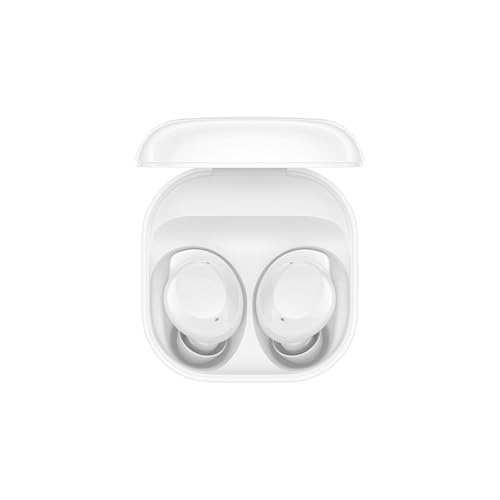
Samsung Galaxy Buds Core
Best Natural Sound & Single-Charge Stamina

Sony WF-C510 Wireless Bluetooth Earbuds
Compare Specifications
A technical side-by-side analysis of performance, durability, and value.
Choose Samsung Galaxy Buds Core for the most secure wingtip fit and premium call clarity, realme Buds Air 8 for class-leading 58-hour battery and dual-driver sound separation, OnePlus Nord Buds 4 Pro for flagship-grade 55dB adaptive ANC, JBL Tune Beam 2 for personalized Personi-Fi 3.0 sound and spatial audio, or Sony WF-C510 for audiophile-grade natural tuning and unmatched 11-hour single-charge stamina.
| Rank | Earbuds | Spec Score | Best For | Our Verdict | Price |
|---|---|---|---|---|---|
| #1 | realme Buds Air 8 | 93/100 | 🏆 58hr Total Playback | The Battery & Dual-Driver King — Class-leading 58-hour total playback with a premium 11mm woofer + 6mm micro-planar tweeter dual-driver setup for exceptional sound separation and depth. | ₹3,799 ₹5,299(28% Off) |
| #2 | OnePlus Nord Buds 4 Pro TWS Earbuds | 91/100 | 55dB Adaptive ANC | The ANC Flagship — 55dB real-time adaptive ANC is the best noise cancellation in this price bracket, paired with punchy 12mm titanium-coated drivers and LHDC 5.0 high-resolution audio support. | ₹3,700 ₹3,999(7% Off) |
| #3 | JBL Tune Beam 2 TWS | 88/100 | Personi-Fi 3.0 | The Personalized Sound Specialist — Personi-Fi 3.0 hearing test calibrates audio to your unique ears, while Spatial Sound and a 6-mic system deliver premium call clarity and immersive entertainment. | Out of Stock |
| #4 | Samsung Galaxy Buds Core | 86/100 | 6-Mic Call Clarity | The Ecosystem & Call Quality Champion — Best-in-class 6-mic call clarity and the most secure wingtip fit in this segment, with Galaxy AI integration for Samsung phone users. | ₹3,199 ₹9,999(68% Off) |
| #5 | Sony WF-C510 Wireless Bluetooth Earbuds | 84/100 | 11hr Single Charge | The Audiophile's Choice — 11-hour single-charge stamina and a clean, natural sound signature with DSEE upscaling, plus physical click buttons that eliminate accidental touches entirely. | ₹3,989 ₹8,990(56% Off) |
Expert Buying Guide
Everything you need to know before deciding — researched and verified by our editorial team.
Single Driver vs Dual Driver: Does More Drivers Mean Better Sound?
✅ Dual Driver Advantage (realme Buds Air 8)
- Dedicated Woofer + Tweeter: The 11mm bass wooper handles low frequencies while the 6mm micro-planar tweeter manages highs — resulting in cleaner sound separation with less distortion at high volumes.
- Wider Soundstage: Dual drivers create a more spacious audio image where instruments and vocals occupy distinct positions rather than blending together.
- Better Treble Extension: The dedicated tweeter can reproduce higher frequencies more accurately than a single full-range driver, making cymbals and hi-hats sound more natural.
- Crossover Complexity: The audio signal must be split between drivers — if poorly tuned, the transition between woofer and tweeter can sound disjointed.
- Higher Power Draw: Dual drivers typically consume more battery than single driver configurations.
- Rare in This Price Bracket: The realme Buds Air 8 is the only dual-driver model in this comparison — most competitors use single driver setups.
⚠️ Single Driver Excellence (Samsung, OnePlus, JBL, Sony)
- Proven Tuning: A well-tuned single driver (like Sony's or Samsung's) can sound more cohesive than a poorly implemented dual-driver system — coherence matters more than driver count.
- Lower Power Consumption: Single driver designs are inherently more battery-efficient, contributing to longer playback times.
- Mature Technology: Single dynamic drivers have decades of refinement — manufacturers know exactly how to tune them for specific sound signatures.
- Physical Limitations: A single driver must reproduce the entire frequency range — at very high volumes, bass and treble can distort simultaneously.
- Narrower Soundstage: Single driver earbuds typically have a more compact soundstage compared to well-implemented dual-driver designs.
- Compromise Tuning: Manufacturers must choose between bass impact, vocal clarity, and treble sparkle — you cannot optimize all three equally with one driver.
Expert Verdict: Dual drivers offer objectively better sound separation on paper, but real-world performance depends entirely on tuning quality. The realme Buds Air 8 implements its dual-driver setup well, but the Sony WF-C510's single driver with DSEE upscaling proves that excellent tuning can outperform raw driver count. Listen before you buy if possible.
ANC Performance: 55dB Claims vs Real-World Noise Blocking
🏆 Top-Tier ANC (OnePlus Nord Buds 4 Pro & realme Buds Air 8)
- 55dB Adaptive ANC (OnePlus): The best ANC in this comparison — effectively blocks consistent low-frequency noise like AC hums, fan noise, and traffic rumble. The adaptive mode adjusts intensity based on your environment automatically.
- 55dB ANC (realme): Matches OnePlus on paper, but real-world performance is slightly less consistent — the ANC occasionally scales intensity up and down unpredictably in certain environments, based on user feedback.
- Practical Impact: Both models are effective at reducing consistent low-frequency noise — sufficient for commuting and office use.
- Transparency Mode Weakness (OnePlus): While ANC is excellent, the transparency mode is notably weak — you will likely need to remove the buds to hear conversations or announcements clearly.
- Inconsistent Scaling (realme): The ANC occasionally fluctuates in intensity without user input, which can be disorienting in quiet environments.
- No Wind Noise Reduction: Neither model handles wind noise well during calls or outdoor use.
❄️ No ANC (Sony WF-C510)
- Zero Battery Drain from ANC: Without ANC circuitry, the Sony achieves 11 hours of continuous playback — more than double most ANC earbuds on a single charge.
- Passive Isolation is Decent: The ergonomic fit provides reasonable passive noise isolation — enough for quiet offices or libraries.
- Ambient Sound Mode with Voice Focus: Sony's ambient mode actually amplifies voices specifically, making it useful for quick conversations without removing the buds.
- No Active Noise Cancellation: At ₹3,399, the lack of ANC is a significant omission — you will hear traffic, chatter, and fan noise clearly.
- Not Suitable for Commuting: Without ANC or strong passive isolation, these are not ideal for buses, metros, or noisy streets.
- Relies on Volume: Users often compensate for lack of ANC by increasing volume, which can lead to hearing fatigue over time.
Reality Check: The 55dB ANC claims from OnePlus and realme are measured in ideal lab conditions. Effective noise reduction in real-world environments depends heavily on ear tip seal and ambient noise type. If ANC is your top priority, the OnePlus Nord Buds 4 Pro is the most consistent performer here.
Battery Life Showdown: 58 Hours vs Real-World Endurance
🔋 Endurance King (realme Buds Air 8 — 58hr Total)
- 58 Hours Total: Nearly double the JBL (48hr) and OnePlus (54hr) — you can charge once every 2-3 weeks with moderate daily use.
- Fast Flash Charging: A quick 10-minute charge provides several hours of playback — useful for forgotten charging sessions.
- Practical Impact: Heavy users (6-8 hours daily) can go 7-9 days between charges. Light users (2-3 hours daily) can stretch to 3-4 weeks.
- No Wireless Charging: Despite the massive battery, the case does not support wireless charging — a missed convenience feature.
- Case Size: The larger battery likely contributes to a slightly bulkier charging case compared to competitors.
⚡ Single-Charge Champion (Sony WF-C510 — 11hr Continuous)
- 11 Hours on a Single Charge: More than double the OnePlus (5-6hr with ANC) and Samsung (6hr with ANC) — you can wear these for an entire workday plus commute without ever docking them.
- 5-Min Quick Charge = 1 Hour: The fastest quick-charge in this comparison — a 5-minute charge gives you a full hour of playback.
- Ideal for Travel: For long flights or train journeys, the Sony's single-charge stamina means you never need to remove them to charge.
- Low Total Case Capacity: The case only provides one additional full charge (22 hours total) — far behind the realme's 58 hours.
- No ANC Trade-off: The impressive single-charge battery is partly because there is no ANC circuitry draining power — not purely a battery technology advantage.
Usage Guide: Choose the realme Buds Air 8 if you hate charging and want maximum total playback. Choose the Sony WF-C510 if you need uninterrupted listening for long workdays or travel sessions without docking. The Samsung, OnePlus, and JBL offer balanced battery performance suitable for most daily users.
Call Quality Comparison: 6-Mic Arrays vs Real-World Performance
📞 Best for Calls (Samsung Galaxy Buds Core & JBL Tune Beam 2)
- Samsung 6-Mic Setup: Three microphones per earbud work together to isolate your voice from background noise — feedback suggests the audio sounds clear and natural in moderate traffic without the hollow echo common in budget earbuds.
- JBL 6-Mic System: Equally impressive call handling — the JBL maintains clarity even in high-volume environments like open offices or busy streets.
- Environmental Noise Suppression: Both models actively filter out wind, traffic, and chatter during calls, keeping your voice the primary signal.
- Samsung Ecosystem Dependency: The full call enhancement features work best with Samsung phones — generic Android and iOS devices may not get the same level of optimization.
- JBL Touch Sensitivity: The touch zone on the JBL stems is positioned where you grip them — pulling them from the case often triggers accidental ANC mode switching during calls.
📢 Good but Inconsistent (realme & OnePlus)
- realme 6-Mic ENC: The environmental noise cancellation effectively reduces background sounds during calls — your voice comes through clearly in moderate noise.
- OnePlus AI Call Enhancement: AI-based noise reduction helps maintain call clarity, though it is slightly less effective than Samsung's or JBL's dedicated 6-mic tuning.
- realme Wind Noise Issues: In outdoor or windy conditions, the mic picks up wind rustle more noticeably than the Samsung or JBL.
- OnePlus Occasional Dropouts: Some user reviews mention brief audio dropouts during calls when switching between Wi-Fi and mobile data.
- Both Lack Sidetone: Neither model provides sidetone (hearing your own voice during calls), which can make you feel like you are shouting.
Call Quality Verdict: If you spend more than 2 hours daily on calls, the Samsung Galaxy Buds Core or JBL Tune Beam 2 are your best choices. The Samsung has a slight edge for indoor calls, while the JBL handles noisy outdoor environments better. The Sony WF-C510 is adequate for occasional calls but lacks the multi-mic arrays of the top contenders.
Product Reviews & Analysis
Detailed breakdowns based on technical specs and user benchmarks.
realme Buds Air 8
Why We Picked It (Pros)
- Massive 58-hour total battery — best in class by a significant margin.
- Dual-driver setup (11mm woofer + 6mm tweeter) for superior sound separation.
- 55dB Smart ANC effectively blocks traffic and fan noise.
- Hi-Res Audio with LHDC codec for high-quality wireless streaming.
- 45ms super low-latency gaming mode for competitive mobile gaming.
- IP55 dust and water resistance — highly resilient for gym and outdoor use.
- AI live translator for 30+ languages via companion app.
- Multi-device connection switching.
Areas for Improvement
- ANC performance can feel slightly inconsistent — occasionally scales intensity automatically.
- No USB-C charging cable included in the box.
- Smooth case exterior scratches easily — a protective case is almost necessary.
- Audio focus switching between laptop and phone sometimes fails to auto-pause background video.
- No wireless charging support.
- Slightly bulkier case due to larger battery capacity.
💡 Expert Insight
OnePlus Nord Buds 4 Pro TWS Earbuds
Why We Picked It (Pros)
- Best-in-class 55dB adaptive ANC — consistent and effective across environments.
- 12mm titanium-coated drivers deliver powerful, deep bass.
- LHDC 5.0 support for high-resolution wireless audio.
- Ultra-lightweight (4.4g per bud) for all-day comfort.
- 3D Spatial Audio for immersive movie and gaming experiences.
- IP55 dust and water resistance rating.
- 54-hour total battery with fast charging (11hr from 10min charge).
- Excellent HeyMelody app with customizable EQ and controls.
Areas for Improvement
- Transparency mode is weak — you will need to remove buds for conversations.
- Matte case finish shows oily fingerprints and dirt marks over time.
- Touch controls can occasionally be erratic or unresponsive.
- HeyMelody app is practically mandatory for optimal audio tuning.
- Bass-forward tuning may not suit fans of neutral or vocal-focused sound.
- Standard 1-year warranty only.
💡 Expert Insight
JBL Tune Beam 2 TWS
Why We Picked It (Pros)
- Personi-Fi 3.0 hearing test creates a personalized sound profile tuned to your ears.
- 6-mic system delivers excellent call clarity in noisy environments.
- Spatial Sound provides wide, immersive audio for movies and shows.
- 48-hour total battery with quick speed-charging support.
- Adaptive ANC with Ambient Aware and TalkThru modes.
- Dual Connect (multipoint) for seamless device switching.
- Google Fast Pair for quick Android setup.
- IP54 water and dust resistance.
Areas for Improvement
- No in-ear wear detection — music does not auto-pause when removing a bud (disappointing at ₹4,499).
- Touch controls are restricted to pre-configured profiles — you cannot assign custom actions.
- Touch zone on stems is positioned where you grip them — pulling from the case often triggers accidental ANC mode switching.
- Companion app has connectivity glitches — frequently struggles to locate earbuds even when streaming audio.
- Premium pricing at ₹4,499 — ₹700-₹1,100 more than comparable feature sets.
- Slightly heavier and bulkier than competitors.
💡 Expert Insight
Samsung Galaxy Buds Core
Why We Picked It (Pros)
- Best-in-class 6-mic call clarity — your voice sounds natural even in traffic.
- Silicone wingtips provide the most secure fit for workouts and active use.
- Galaxy AI features and Auto Switch for seamless Samsung ecosystem integration.
- Punchy, controlled bass tuning that suits modern pop and hip-hop.
- IP54 water and dust resistance for sweat and light rain protection.
- SmartThings Find helps locate misplaced earbuds.
- Competitive ₹3,399 pricing for Samsung build quality.
Areas for Improvement
- No in-ear wear detection — music does not auto-pause when removing a bud.
- No wireless charging support — USB-C charging only.
- Does not include a USB-C charging cable in the box.
- App features are severely limited on non-Samsung Android phones and unavailable on iOS.
- Basic ANC performance — blocks consistent hums (AC/fans) but struggles with chatter and traffic honks.
- Touch controls on stems can be overly sensitive, causing accidental pauses when adjusting fit.
- Only 6 hours of playback with ANC on — below the segment average.
💡 Expert Insight
Sony WF-C510 Wireless Bluetooth Earbuds
Why We Picked It (Pros)
- Class-leading 11-hour single-charge battery — wear all day without docking.
- Natural, balanced sound signature with excellent vocal clarity and instrument separation.
- Physical click buttons eliminate accidental touch triggers during workouts or adjustments.
- DSEE audio upscaling improves compressed music quality noticeably.
- Featherlight and ergonomic design — exceptionally comfortable for small ears.
- Multipoint connection for seamless switching between two devices.
- IPX4 splash resistance for light workouts and rain protection.
- 5-minute quick charge provides 1 hour of playback.
Areas for Improvement
- No Active Noise Cancellation — relies entirely on passive physical isolation.
- Low total case capacity — only 22 hours total (one extra full charge).
- Flat out-of-the-box tuning requires app customization for punchy bass.
- Plastic charging case feels fragile with a loose, thin top hinge.
- Not ideal for noisy environments like public transport or busy streets.
- Microphone quality is adequate but not exceptional for calls.
💡 Expert Insight
Frequently Asked Questions
Quick answers to common questions about Electronics.
Expert GuideWhat is the difference between TWS earbuds and wireless neckband earphones?
What is the difference between TWS earbuds and wireless neckband earphones?
TWS (True Wireless Stereo) earbuds have no connecting wire between the left and right buds — each bud connects independently to your phone. Neckband earphones have a flexible band that sits around your neck with wires going to each earbud. TWS earbuds offer more freedom of movement and are more portable, while neckbands typically offer longer battery life and are harder to lose. For most buyers in 2026, TWS earbuds are the preferred choice for their convenience and compact form factor.
Expert GuideIs ANC worth paying extra for in earbuds under ₹5,000?
Is ANC worth paying extra for in earbuds under ₹5,000?
Yes, if you commute regularly, work in noisy environments, or want to listen at lower volumes. ANC earbuds like the OnePlus Nord Buds 4 Pro (55dB) and realme Buds Air 8 (55dB) effectively reduce background noise, allowing you to hear your music clearly at lower, safer volumes. This also reduces listening fatigue during long sessions. If you primarily use earbuds in quiet environments like home offices or libraries, you can save money by choosing a non-ANC model like the Sony WF-C510.
Expert GuideHow important is codec support (LHDC, LDAC, AAC) for audio quality?
How important is codec support (LHDC, LDAC, AAC) for audio quality?
Codec support matters most if you listen to high-resolution audio from streaming services like Apple Music Lossless, Tidal, or Amazon Music HD. LHDC 5.0 (supported by OnePlus and realme) transmits up to 900kbps — significantly more data than standard SBC (328kbps) or AAC (256kbps). However, for casual listeners using Spotify, YouTube Music, or standard AAC streams, the difference is subtle. The earbud tuning and driver quality matter far more than the codec for everyday listening.
Expert GuideCan I use these earbuds for gaming? Is low latency mode important?
Can I use these earbuds for gaming? Is low latency mode important?
Yes, all 5 earbuds in this comparison can be used for gaming, but low latency mode makes a noticeable difference. The realme Buds Air 8 (45ms) and OnePlus Nord Buds 4 Pro (47ms) offer the lowest latency — audio syncs nearly perfectly with on-screen action, making them suitable for competitive games like BGMI, Call of Duty Mobile, and Free Fire. Standard mode (200-300ms) introduces a noticeable delay between audio and video, which is fine for casual games but frustrating for fast-paced titles.
Expert GuideDo these earbuds support dual-device pairing (multipoint connection)?
Do these earbuds support dual-device pairing (multipoint connection)?
Yes, all 5 models in this comparison support dual-device pairing or multipoint connection, allowing you to connect to your phone and laptop simultaneously. This is particularly useful for taking calls on your phone while watching videos on your laptop — the earbuds automatically switch audio focus to the incoming call and resume playback after. The Samsung Galaxy Buds Core offers the most seamless implementation within the Galaxy ecosystem with its Auto Switch feature.
Expert GuideWhich earbuds under ₹5,000 have the best fit for working out and running?
Which earbuds under ₹5,000 have the best fit for working out and running?
The Samsung Galaxy Buds Core is the best choice for workouts thanks to its silicone wingtips that lock into your ear ridges — they will not fall out during running, jumping jacks, or gym sessions. The IP54 rating provides sweat and light rain protection. The OnePlus Nord Buds 4 Pro (IP55) and realme Buds Air 8 (IP55) offer better water resistance but rely on standard ear tips without wingtips, making them slightly less secure for intense movement. The Sony WF-C510 (IPX4) is fine for light workouts but not ideal for heavy sweating.
realme Buds Air 8How does the dual-driver setup actually sound compared to single-driver earbuds?
How does the dual-driver setup actually sound compared to single-driver earbuds?
The dual-driver setup provides noticeably better instrument separation — you can distinctly hear bass guitars, kick drums, and synth pads occupying their own space rather than blending into a single wall of sound. The 6mm tweeter adds sparkle to cymbals and hi-hats that single-driver earbuds in this price range often roll off. However, the tuning is still consumer-friendly with elevated bass — this is not a flat studio monitor sound. For most listeners, the realme offers the most detailed and spacious soundstage in this comparison.
realme Buds Air 8Is the 58-hour battery claim realistic for daily use?
Is the 58-hour battery claim realistic for daily use?
The 58-hour figure is total playback with the charging case (buds + case combined). The buds themselves last approximately 8-10 hours on a single charge with ANC off, or 6-7 hours with ANC on. The case holds roughly 5 additional full charges. In real-world mixed usage (4-5 hours daily with ANC on), most users report charging once every 10-14 days. This is still class-leading — most competitors require weekly charging.
OnePlus Nord Buds 4 Pro TWS EarbudsHow does the OnePlus 55dB ANC compare to the realme 55dB ANC in real-world use?
How does the OnePlus 55dB ANC compare to the realme 55dB ANC in real-world use?
The OnePlus ANC is more consistent. While both claim 55dB, the OnePlus adaptive algorithm maintains steady noise cancellation without the occasional intensity fluctuations reported by some on the realme. Both are effective at reducing consistent low-frequency noise for commuting and office use. The OnePlus has a slight edge in handling sudden loud noises (like honking) — it adjusts faster. The realme has a slight edge in battery life. For ANC quality alone, choose the OnePlus.
OnePlus Nord Buds 4 Pro TWS EarbudsCan I use the OnePlus Nord Buds 4 Pro with an iPhone?
Can I use the OnePlus Nord Buds 4 Pro with an iPhone?
Yes, they work as standard Bluetooth earbuds with iPhones — you can play music, take calls, and use basic touch controls. However, the HeyMelody app is not available on iOS, so you cannot customize EQ, update firmware, or access the 3D Spatial Audio tuning. The LHDC 5.0 codec also requires an Android device — iPhones will use AAC. For full feature access, an Android phone (preferably OnePlus) is recommended.
JBL Tune Beam 2 TWSHow does Personi-Fi 3.0 work and is it worth the extra cost?
How does Personi-Fi 3.0 work and is it worth the extra cost?
Personi-Fi 3.0 plays a series of tones at different frequencies and volumes through each earbud — you tap the screen when you hear each tone. The app maps your hearing sensitivity across the frequency spectrum and creates a custom EQ curve that compensates for any hearing variations. For most listeners under 30 with normal hearing, the difference is subtle — a 5-10% improvement in perceived clarity. For older listeners or anyone with known hearing variations, the improvement can be dramatic — 20-30% better vocal clarity and detail retrieval. Whether it is worth the ₹4,499 premium depends on your hearing health and how much you value personalized tuning.
JBL Tune Beam 2 TWSIs the JBL Tune Beam 2 worth the extra cost over the OnePlus Nord Buds 4 Pro?
Is the JBL Tune Beam 2 worth the extra cost over the OnePlus Nord Buds 4 Pro?
The JBL costs ₹700 more than the OnePlus (₹4,499 vs ₹3,799). You get Personi-Fi 3.0 personalization, better spatial audio for movies, and slightly better call quality in noisy environments. You lose in-ear detection, get less effective ANC, and deal with a buggier companion app. For most buyers, the OnePlus offers better value — better ANC, lighter design, and more features at a lower price. Choose the JBL only if personalized sound calibration is important to you or if you watch a lot of movies on your earbuds.
Samsung Galaxy Buds CoreDo the Galaxy Buds Core work well with iPhones?
Do the Galaxy Buds Core work well with iPhones?
They work as standard Bluetooth earbuds with iPhones — you can play music, take calls, and use basic controls. However, the Galaxy Wearable app is not available on iOS, so you cannot customize EQ settings, update firmware, or access Galaxy AI features. The 6-mic call quality still works, but you lose Auto Switch, SmartThings Find, and advanced audio tuning. If you use an iPhone, consider the JBL Tune Beam 2 instead for better cross-platform support.
Samsung Galaxy Buds CoreHow secure are the wingtips during intense workouts?
How secure are the wingtips during intense workouts?
The silicone wingtips are designed to fit into the anti-helix ridge of your ear — this creates a mechanical lock that standard round ear tips cannot provide. Finding the right wingtip size (small/medium/large included) is important — the wrong size can cause discomfort after 60+ minutes of wear. The design is engineered to stay put during running, jumping rope, weightlifting, and HIIT sessions.
Sony WF-C510 Wireless Bluetooth EarbudsHow does the Sony WF-C510 sound without ANC in noisy environments?
How does the Sony WF-C510 sound without ANC in noisy environments?
Without ANC, the WF-C510 relies on passive noise isolation from the ear tips. In quiet environments like home offices or libraries, the isolation is sufficient — you can listen comfortably at moderate volumes. In noisy environments like buses, metros, or busy streets, you will need to increase the volume significantly to hear details, which can cause listening fatigue over time. The ambient sound mode with Voice Focus helps in moderately noisy settings by amplifying speech while reducing background noise, but it is not a substitute for ANC.
Sony WF-C510 Wireless Bluetooth EarbudsIs the Sony WF-C510 good for small ears?
Is the Sony WF-C510 good for small ears?
Yes — this is one of the WF-C510's strongest advantages. The redesigned housing is significantly smaller and more ergonomic than most competitors. The lightweight design (approximately 4.6g per bud) and low-profile shape mean they sit flush in the ear without protruding — making them comfortable for side-sleepers and glasses wearers as well.
Arjun Nair · Audio & Tech Reviewer
Arjun Nair has over 7 years of experience reviewing audio gear, smartphones, and consumer electronics. He specializes in sound quality analysis, ANC performance benchmarking, and real-world battery testing for Indian consumers. His earbud reviews focus on practical fit, call clarity in Indian traffic conditions, and long-term reliability.
Related Guides & Comparisons
Explore more expert picks in the Electronics category.

6 Best Selfie Stick Tripods in India (2026): Top Vlogging Stands Under ₹2,500

4K QLED vs FHD: 4 Best 43-Inch Smart TVs Under ₹25,000 in India (2026)

Best 5.1ch Dolby Audio Soundbars in India (2026): Why Sony Beats the Competition
© 2026 Someinfo Picks · Consumer Tech Intelligence